
The Problem Usually Doesn't Start Where You Think It Does
Most warehouse managers don't spend their day worrying about phishing emails.
They're focused on keeping inventory moving, making sure orders ship on time, managing staffing challenges, and solving the dozens of operational issues that come with running a busy warehouse. Technology is important, but it's usually something that sits quietly in the background until it stops working.
That's exactly why cybercriminals are successful.
They don't target warehouses because they expect employees to make reckless decisions. They target warehouses because the pace of work is fast, attention is divided, and people are constantly moving from one task to the next. In an environment where every minute matters, it's easy to make a quick decision without realizing the consequences that could follow.
The Click Isn't the Real Problem
When people think about cybersecurity, they often imagine a dramatic event. They picture a suspicious email, an employee clicking a bad link, and a security alert immediately appearing on someone's screen.
In reality, that's rarely how it happens.
More often, the click itself seems harmless. An employee opens an email that looks legitimate. Maybe it's a shipping notification, an invoice, a shared file, or a request that appears to come from a vendor. Nothing appears broken. Operations continue. Employees keep working.
What most people don't realize is that the click isn't the problem.
The problem is everything that click now has access to.
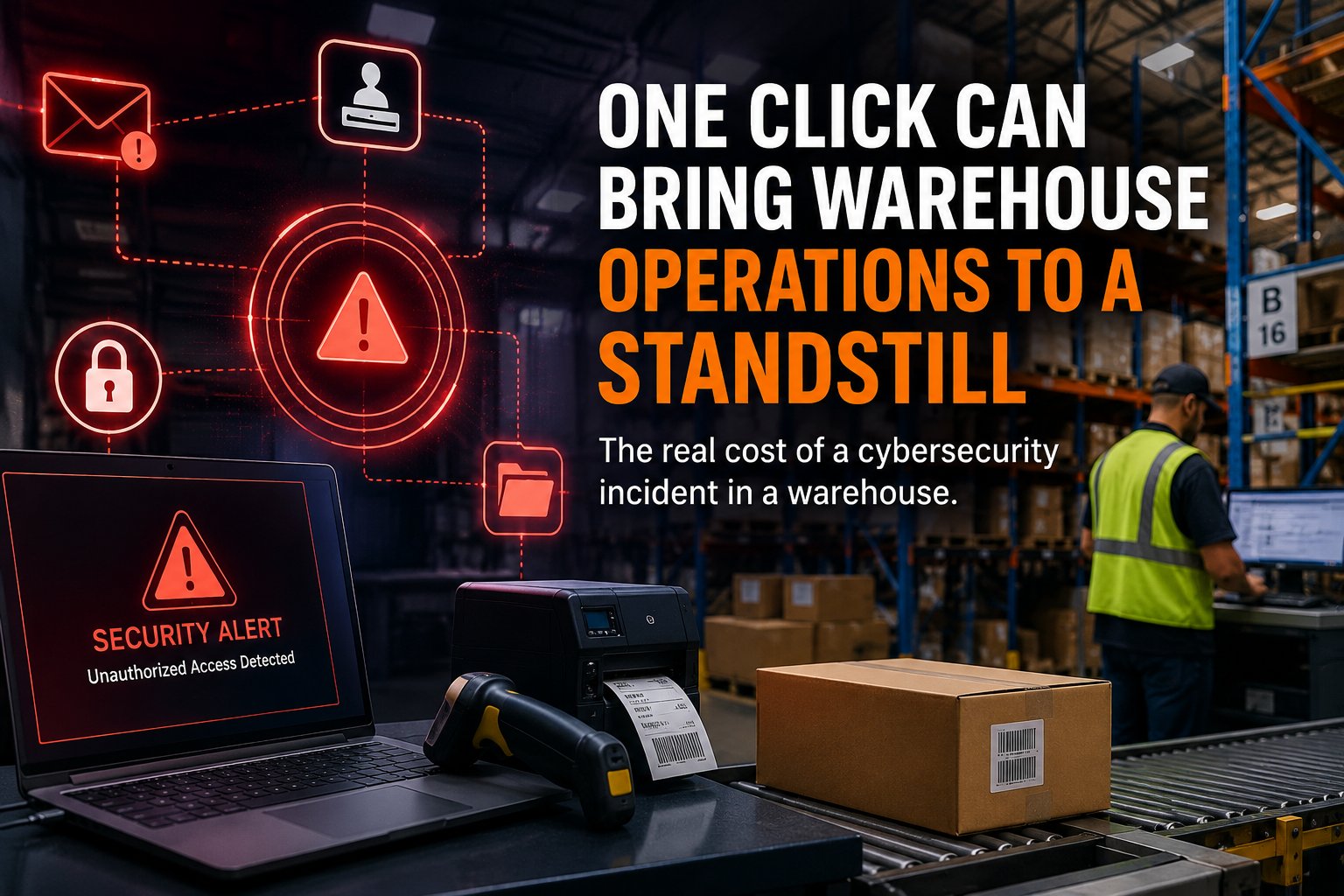
A modern warehouse depends on a connected ecosystem of technology. Inventory systems communicate with shipping platforms. Employees rely on scanners, printers, wireless networks, cloud applications, and shared files throughout the day. Once an attacker gains access to one part of that environment, the damage can spread quietly behind the scenes long before anyone realizes something is wrong.
Why Cyber Incidents Hit Warehouses So Hard
In many businesses, a security issue may affect a single employee or department.
In a warehouse, the impact can quickly become operational.
When systems become unavailable, employees cannot scan inventory. Shipping teams struggle to process orders. Label printers stop producing shipping documents. Inventory information becomes unreliable. Customer service teams suddenly find themselves answering difficult questions about delayed shipments and missing orders.
The longer the disruption continues, the more expensive it becomes.
What started as a single mistake can quickly turn into delayed deliveries, frustrated customers, lost productivity, and a growing backlog of work that has to be recovered once systems are restored.
That is why warehouse leaders should think about cybersecurity as an operational continuity issue rather than simply an IT issue.
Why "Be More Careful" Isn't a Real Solution
When security incidents happen, the first reaction is often to focus on the employee who clicked the email.
The problem with that approach is that it assumes people have unlimited time to inspect every message that arrives in their inbox.
They don't.
Warehouse employees work in fast-moving environments. Supervisors are managing multiple priorities at once. Operations managers are jumping between meetings, customer issues, staffing concerns, and production demands throughout the day.
Mistakes are inevitable.
The goal should never be to build a business that depends on perfect human behavior. The goal should be to build systems that continue protecting the organization even when people make normal human mistakes.
The Warehouses That Recover Fastest Think Differently
The most resilient warehouse operations understand that security is really about limiting the impact of a mistake.
They assume that sooner or later someone will click something they shouldn't.
Because of that, they focus on building layers of protection that reduce the damage if it happens.
They implement multi-factor authentication so passwords alone cannot unlock critical systems. They filter suspicious emails before they ever reach employees. They restrict access to sensitive information and maintain secure backups that can be restored quickly if necessary.
Most importantly, they build processes that help identify problems before they spread throughout the organization.
The result is not perfect security.
The result is resilience.
A Question Every Warehouse Leader Should Ask
Imagine an employee receives a malicious email this afternoon.
The email looks legitimate. They click the link and continue working without realizing anything is wrong.
What happens next?
Would the issue remain isolated to a single account?
Or would it affect your inventory systems, shipping operations, shared files, and daily workflows?
Would your team still be productive tomorrow morning?
Would your customers notice?
The answers to those questions reveal far more about your level of risk than any cybersecurity report ever could.
Technology Shouldn't Be the Reason Work Stops
At the end of the day, warehouse leaders are not measured by how many security tools they own.
They're measured by whether operations run smoothly, whether orders ship on time, and whether employees have the systems they need to do their jobs effectively.
Cybersecurity matters because it protects those outcomes.
The strongest warehouse operations are not the ones that avoid every mistake. They're the ones that continue moving forward when mistakes inevitably happen.
Because technology should support operations, not become the reason they come to a halt.
If you're unsure whether your warehouse could continue operating after a security incident, a Warehouse Technology Risk Assessment can help identify vulnerabilities before they disrupt productivity, shipping, and customer satisfaction.